May did not complete the sequence
The strong shock of May 6, 1976 initiated the most frequently cited phase of the disaster. The September quakes again hit an area whose buildings were already damaged. The INGV historical catalogue shows why assessing the effects of subsequent events requires separating new damage from previous structural weakening.
Collective memory often focuses on a single date, but the residents' experience spanned many months. Returning to the building, beginning work to secure it, and another shock could occur in succession. Chronology is therefore important both for seismology and for family history.
Two types of documentation
The INGV and OGS 50th anniversary project combines knowledge of the seismic sequence with photographs, recordings and reconstruction evidence. A record of ground motion answers other questions than the report of the person who left the house. Neither of these sources replaces the other.
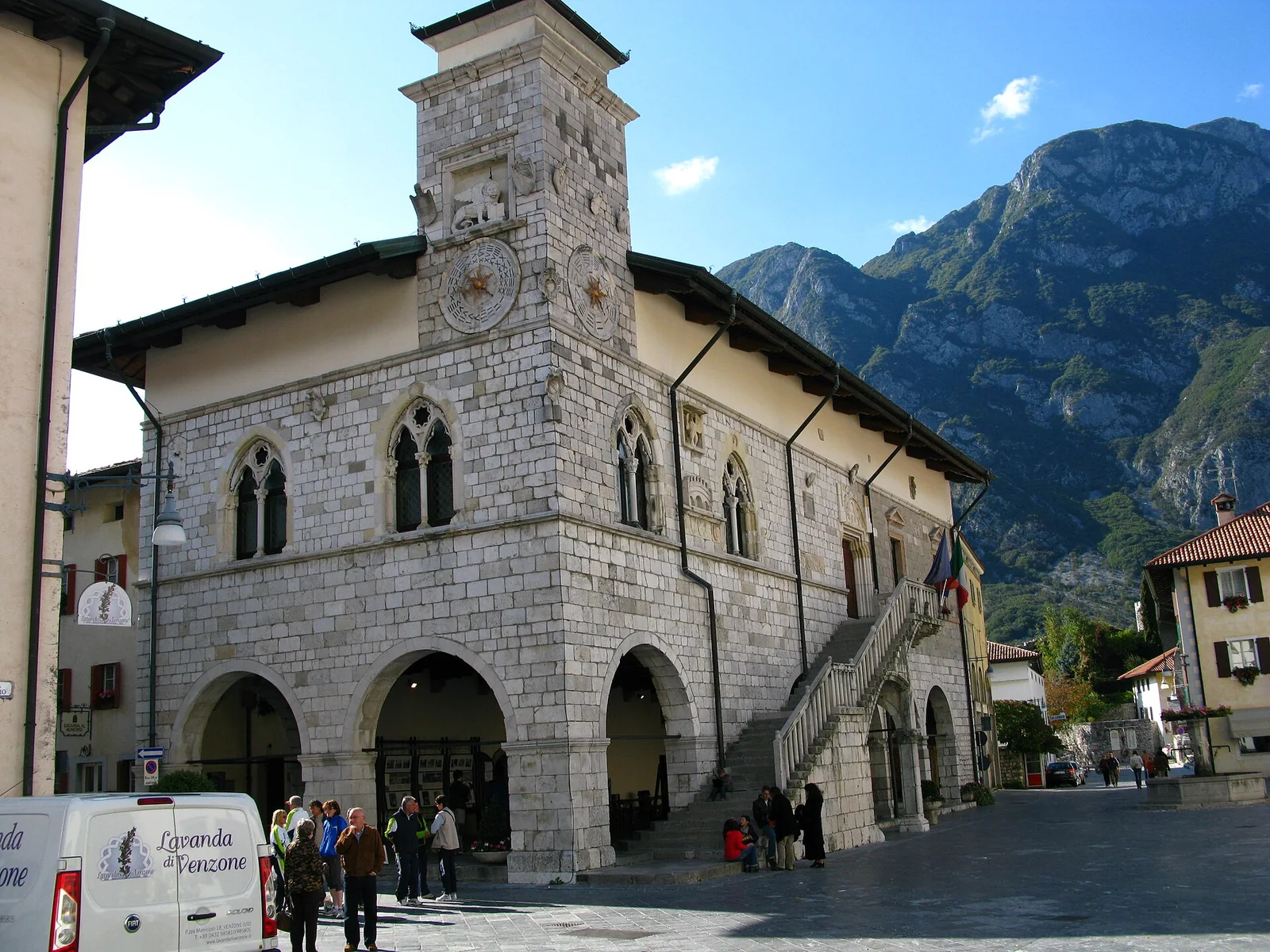
A photo of the collapsed wall helps locate the destruction, but is not sufficient to reconstruct the entire history of the building. You need to know the previous condition, the course of subsequent shocks and subsequent work. Similarly, today's quiet square does not show by itself how many of its elements have been preserved and how many have been recreated.
Reconstruction as a social decision
Regional archives document the organization of aid and the creation of institutions responsible for reconstruction. It was not just a problem of repeating old facades. It was necessary to determine the sequence of works, restore the functions of the town and reconcile the heritage with the construction requirements.
Therefore, the term rebuilt city covers several layers: materials, street layout, economic activities and the ability to live there again. Comparing Friuli before and after the disaster only makes sense if we indicate which layer we are describing. The preserved silhouette of the church and the continuity of the local community are related, but they are not the same type of continuity.
Sources and further reading
- INGV and OGS: fifty years after the earthquake ↗Checked: 2026-11-25
- INGV: historical seismic sequence catalogue ↗Checked: 2026-11-25
- ERPAC: Disaster and Reconstruction Documentation ↗Checked: 2026-11-25
The thematic description does not mean that all places mentioned are on the basic GPX. Check the availability of attractions and services for the date of your visit.