First understand the layout of the city
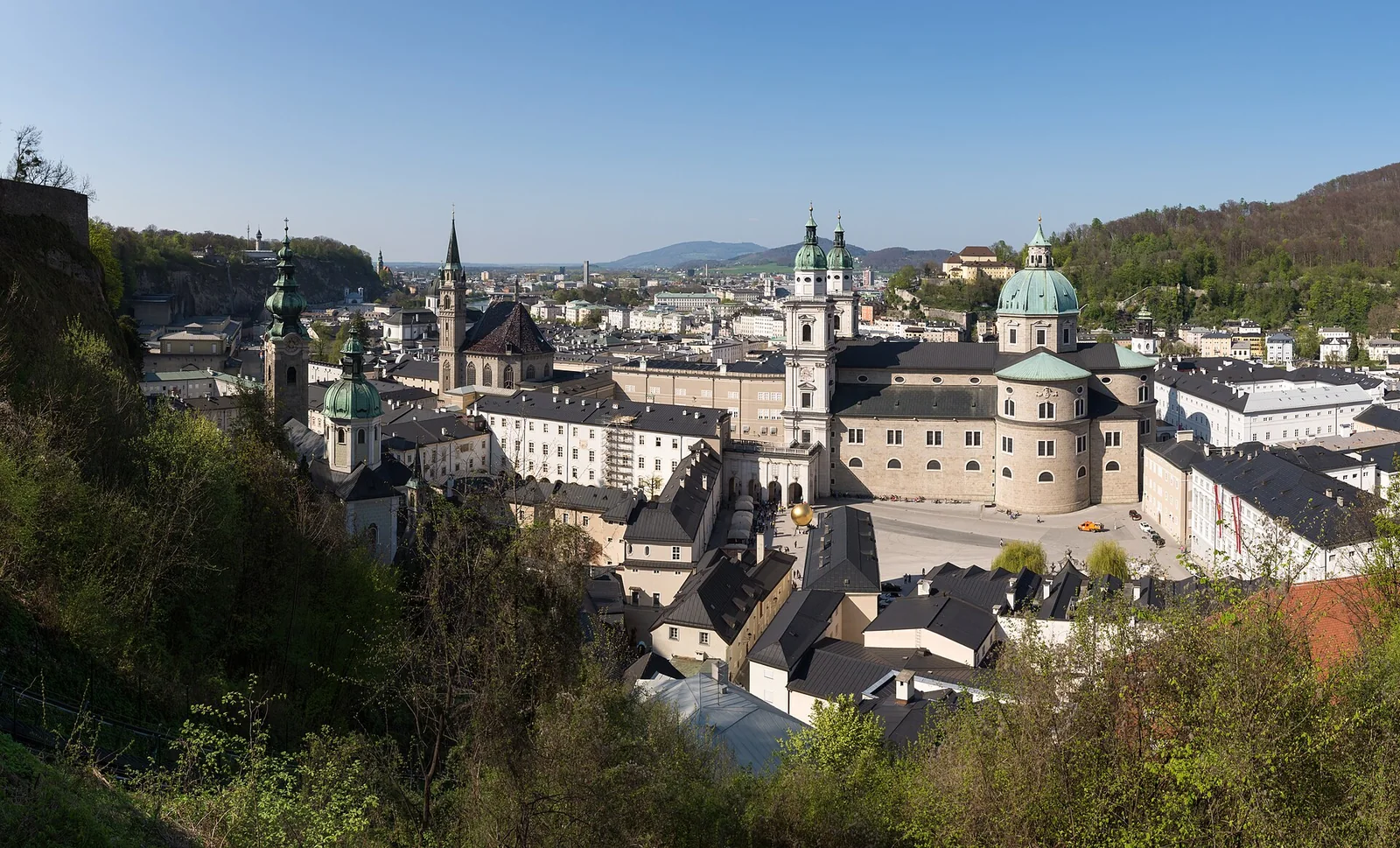
Salzburg is best viewed on two scales: first from the bank of the Salzach, where you can see the city's connection with the river and the fortress, and then up close, between the squares next to the cathedral. We advise cyclists to follow this order, because the next morning the river will become the axis of the entire first part of the journey. The view of the fortifications above the roofs does not necessarily mean that you have to climb to the top during the same walk.
Instead of trying to cover all the objects on the list, choose one question: what did the archbishops' residence look like, how does the city lie between the mountains and the water, or how does Mozart function in his today's identity? This allows you to create a coherent visit. Just going from one monument name to another gives you a less than thorough look at two adjacent squares and one interior.
Cathedral and squares: a monumental beginning
Today's cathedral was consecrated in 1628. For a visitor, more important than remembering the date is the difference between the wide space in front of the temple and the denser development of the neighbouring streets. It can be treated as a simple lesson in how church architecture and the representation of power co-created the city centre.
The short variant includes viewing the building from the outside, crossing between Domplatz and Residenzplatz and reaching Mozartplatz. Entrance to the cathedral is a separate choice depending on the current access and services taking place. If you have an hour to explore the entire city, don't plan on visiting the museum at the same time; the number of neighbouring buildings does not mean that their interiors can be seen in just a few minutes.
Hohensalzburg: history from below
The origins of Hohensalzburg date back to 1077 and the actions of Archbishop Gebhard during the investiture dispute. The same era will appear the next day at Hohenwerfen. The juxtaposition of the two fortresses helps you see that the journey along the Salzach leads through a former political and economic corridor, not a random collection of pretty places.
Plan the entrance to the fortress as the main point of a separate part of the day. If you arrive by car in the late afternoon, the panorama from the waterfront may be a better choice than a hasty rush to the ticket offices. Visiting the hill is not a warm-up required for Alpe Adria. Leaving it for the day of your return only makes sense if you actually plan to spend extra time in Salzburg.
Crossing to the other side
Crossing the river changes the way you view the centre: you get a wider frame instead of further details of the facades. We suggest using this fragment as a quieter part of the walk, especially after a long car ride. You don't have to follow the official tourist route exactly to see the relationship between Salzach, the old town and the fortress.
The official UNESCO walk also leads towards Linzer Gasse, the cemetery of St. Sebastian and Mirabell. In the evening variant, choose one target from this area. Treat Mirabell as an extension on the other side of the river, not an additional duty at the end of a tired day. Check the availability of specific parts of gardens and buildings separately, especially out of season.
One interior instead of several queues
A museum visit is most valuable when you choose it according to your interests. Lovers of the history of power and art can pay attention to the DomQuartier, those interested in music can focus on objects related to Mozart, and those interested in fortifications can focus on the fortress. This choice is an original proposal for organising your time, not a package including a common ticket.
First check the time of last entry and the expected viewing time, only then adjust your dinner. In a group of four, it is worth accepting that not everyone has to visit the same interior. Separating interests is easier here than during the cycling stage: one pair can choose a museum, the other a walk, and the joint ending is a dinner in the centre.
Three time variants
For about 45-60 minutes we suggest Mozartplatz, the cathedral and one section above Salzach. For about two hours, add a crossing to the other bank and one selected place on the Mirabell or Linzer Gasse side. The times given are our organisational framework, without entrances requiring waiting.
With a free half-day window, you can base yourself on the official UNESCO walk and add one interior. However, do not transfer the entire plan to the morning of departure. The four-day variant begins with a long stage to Bad Gastein, while the five-day variant also requires reaching the Gastein Valley; A shorter first day does not mean a free morning in Salzburg.
Dinner as part of the walk
When choosing a place, compare its location with the end of the walk and overnight stay. The long walk back through the city after dinner may take more time than the sightseeing itself. For three or four people, it is helpful to indicate one common meal time and leave the choice of the previous programme free.
Don't assume that every historic street has a restaurant open until late. If your arrival is delayed, arrange a meal before choosing an additional sight. Do your shopping for the first section of the next day separately: an evening tour of the centre and supplies for the expedition are two different needs.
Mozartplatz without a rushed starting ceremony
Mozartplatz, indicated as the beginning of the official trail, is worth exploring during a walk. Thanks to this, the morning starting photo does not require searching for a square and comparing pins. If the hotel is located with convenient access to the riverside, you can take a group photo in the evening and join the route in a logical place in the morning.
Determine access to the trail from the exact address of your accommodation. The biggest benefit of an evening walk is getting used to the city before taking off. Salzburg remains the first chapter of the journey, even if you don't check off all its attractions.
Sources and currency
- Salzburg Tourism - Cathedral ↗Checked: 2026-11-24
- Hohensalzburg - the history of the fortress ↗Checked: 2026-11-24
- Salzburg Tourism - UNESCO Walk ↗Checked: 2026-11-24
Organizational tips, selection of stops and scenarios are editorial suggestions. Times and budgets are not an offer or reservation. Check the opening of attractions, announcements and transport conditions for a specific date. Additional trips are not automatically part of the GPX.