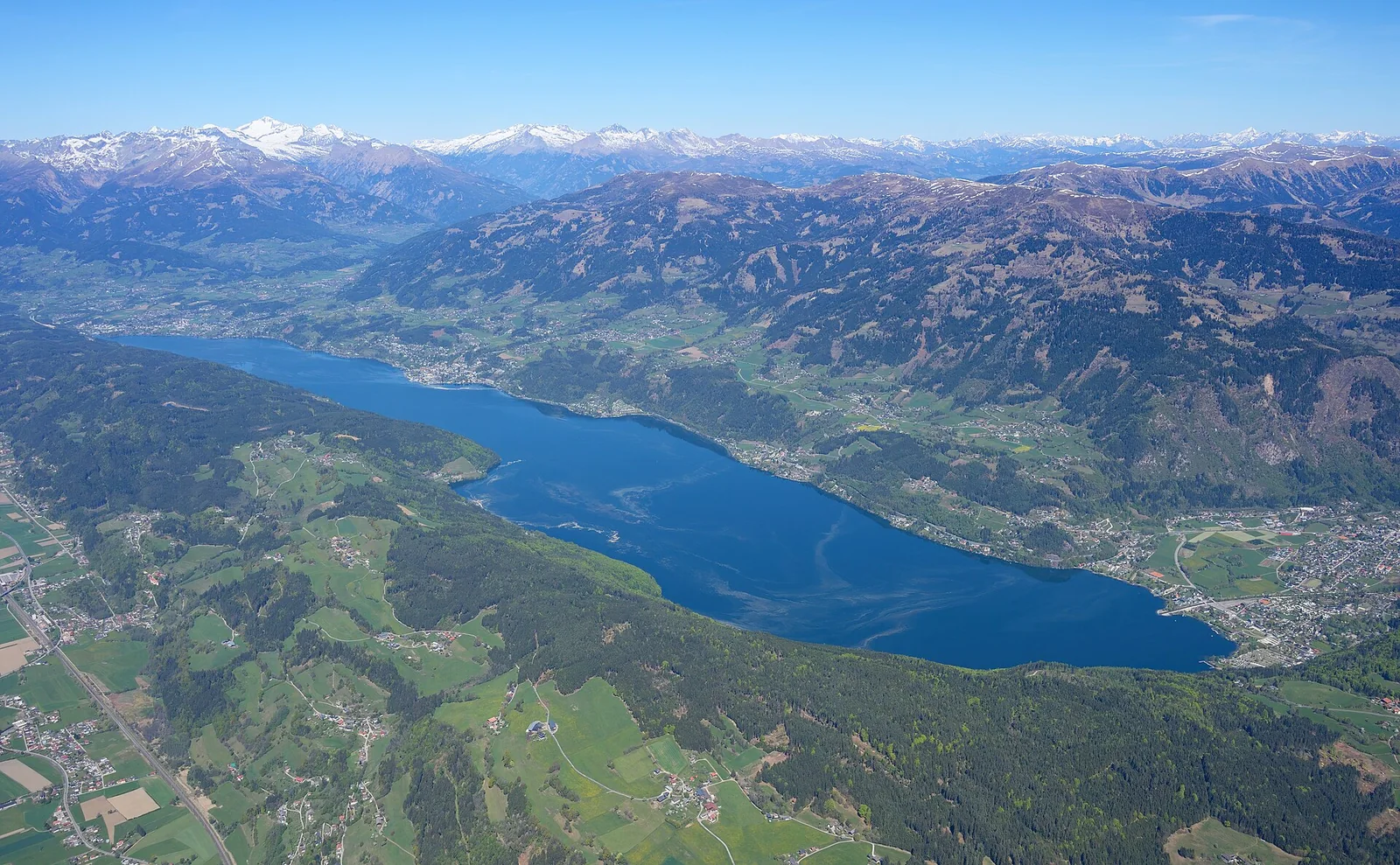
The deepest does not mean the largest in terms of surface area
Millstätter See has a maximum depth of approximately 141 metres and an area of approximately 13.3 square kilometres. It is the deepest and most water-rich lake in Carinthia, although it is smaller than Wörthersee in surface area.
Comparing lakes therefore requires you to specify the measure. Surface area describes the size of the water surface, depth describes the basin shape, and volume describes the amount of water held. These features influence how the lake responds to incoming substances and changes in temperature.
The problem of eutrophication
In the second half of the 20th century, excessive supply of nutrients promoted eutrophication. More nutrients can mean more algae production, and the subsequent decomposition of organic matter increases oxygen consumption.
In the early 1970s, the construction of a sewage disposal system in the catchment area was started. The lake's protection had to extend to the surrounding towns: just cleaning the shore would not solve the problem carried into it by the water.
Long measurement memory
Water-quality research dates back to Ingo Findenegg’s work in the 1930s. Later observations were continued by the Kärntner Institut für Seenforschung. This provides a basis for comparing the period of deterioration with the changes following investment in sewerage infrastructure.
The lake is a good example of the relationship between sanitary infrastructure and nature. Today's image of clean water has a history of measurements, decisions and expenditures incurred beyond the surface itself.
Sources and further reading
- Carinthian Institute of Lake Research — long-term development of Millstätter See ↗Checked: 2026-11-25
- Kärnten - Millstätter See ↗Checked: 2026-11-25
The thematic description does not mean that all places mentioned are on the basic GPX. Check the availability of attractions and services for the date of your visit.