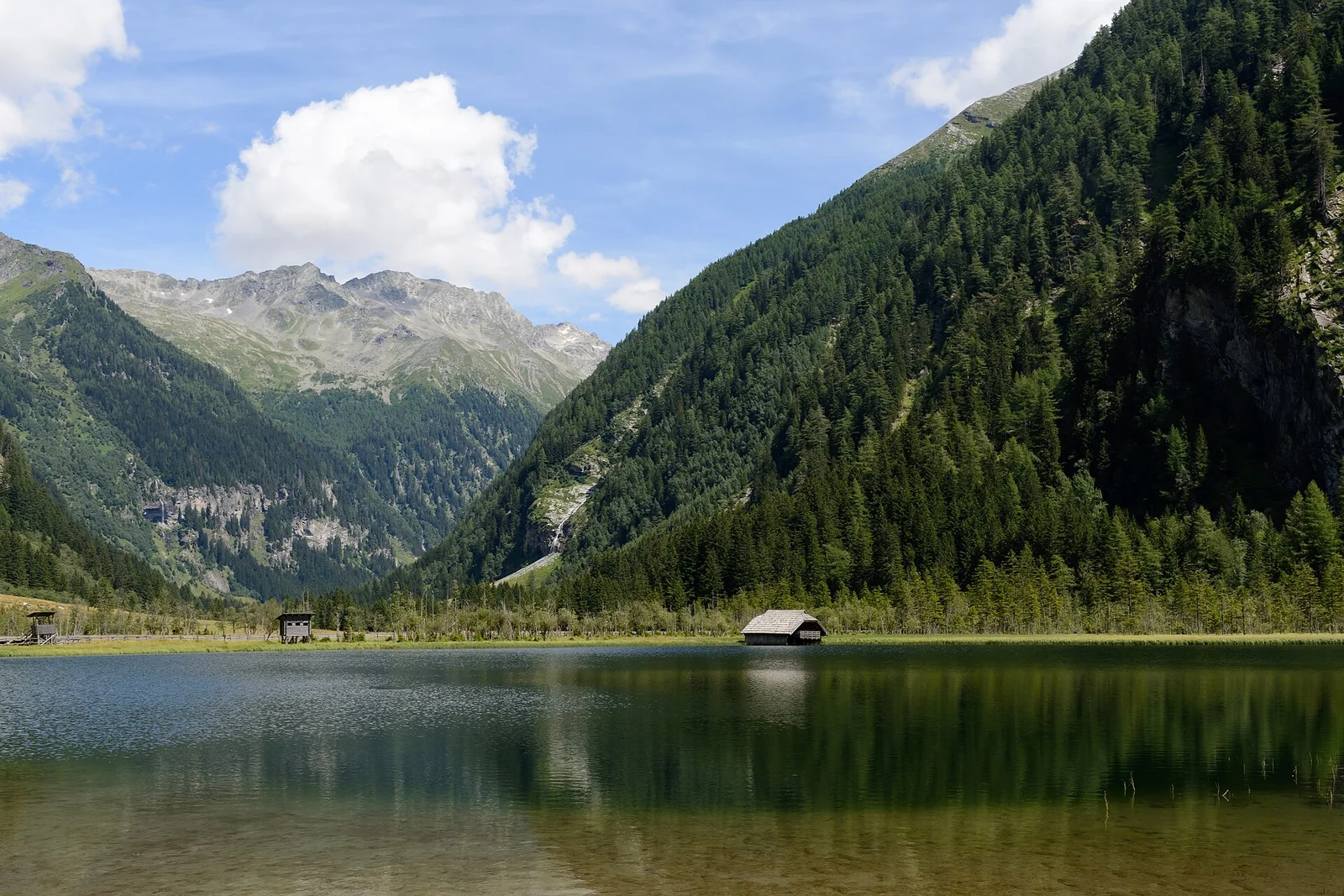
Protecting the land, not just the peaks
The history of the park is related to the activities of nature and mountaineering organisations and the purchase of land intended for protection. August Prinzinger and Albert Wirth played an important role. Already before the park was formally established, attempts were made to protect vast fragments of the mountains against transformation.
It wasn't just about preserving beautiful panoramas. The development of hydropower, roads and skiing meant specific, competing uses of the same valleys. The park was a choice about space and its long-term function.
1971 does not mean the creation of the park yet
In 1971, representatives of Carinthia, Salzburg and Tyrol signed the Heiligenblut Agreement. They agreed to cooperate on a common park. This was an important political step, but individual parts were created later, based on the laws of the federal states.
The first part was established in Carinthia in 1981. Salzburg joined in 1984 and Tyrol in 1992. That's why you can find several different dates in the descriptions: they refer to subsequent stages of the same project.
One landscape, several administrations
Mountain ecosystems do not end at administrative borders. Rivers, animals and geological processes create continuity, while institutional responsibilities remain divided. A shared park therefore requires coordination of research, education and management.
The Hohe Tauern includes both a high-mountain landscape and places long associated with pastoral use. Its history shows that protecting nature does not mean ignoring the inhabitants, but agreeing where natural processes should take priority and where maintaining the traditional landscape should take priority.
Two different subjects of protection
In the high parts of the mountains, the fundamental value is the possibility of natural processes occurring: erosion, changes in glaciers or plant succession on glacier forelands. Preserving nature does not mean retaining the landscape as it was in one photograph.
However, on long-used Alpine pastures, the cultural landscape may also be protected. The open meadow and pastoral buildings exist thanks to human work. Different approaches are therefore needed in the same large area. Zoning helps avoid the assumption that one type of intervention will be appropriate for each part of the park.
Sources and further reading
- National Park — facts, figures and history ↗Checked: 2026-11-25
- Alpenverein — history of the national park partnership ↗Checked: 2026-11-25
The thematic description does not mean that all places mentioned are on the basic GPX. Check the availability of attractions and services for the date of your visit.