Two endings in one day
The first ending is reaching the agreed point by the sea. The second begins when you put your bikes aside and can enter the city without thinking about further kilometres. It is worth giving space to both moments. Just taking a photo from the beach doesn't replace a short walk around Grado, but you don't have to start it immediately after getting off your bike.
If you arrive late, choose only the port and streets in the evening and leave the interior for the morning. Getting back to the car in Salzburg is a separate logistical day; don't assume it will fit effortlessly between breakfast and a full city tour.
Gravo vecia: a city on a small scale
The historic part of Grado has a network of narrow streets and small squares. The official portal recalls the city's fishing tradition and the port with its characteristic branched layout. Here it is best to slow down to a walking pace and allow for short crossings without constantly checking the meter.
Notice the change compared to Palmanova: instead of geometric legibility, there is a more complex sequence of alleys and openings. It's a good end to the day with different types of cities. Don't force yourself to look for one "prettiest street"; character creates the entire system and the way its residents use it.
Sant'Eufemia: Early Christianity on the Lagoon
The Basilica of Sant'Eufemia stands in Campo dei Patriarchi. Its completion in 579 is associated with Bishop Elijah. The interior retains mosaics and later elements of furnishings, and next to the complex there is a baptistery and the church of Santa Maria delle Grazie. These are several adjacent sites that can be viewed as a related complex.
After Aquileia, it is worth comparing the scale and rhythm of the mosaics, without expecting an identical experience. Grado gives you the opportunity to see the further history of the region and another religious interior. During the service, limit the programme to the available parts or come back later; the centre does not cease to be attractive when a specific interior is temporarily unavailable.
Two details instead of the full catalogue
In Sant'Eufemia, it is worth paying attention to the pulpit and the geometric rhythms of the floor. The regional description also indicates inscriptions commemorating people who contributed to the creation of mosaics. It is a reminder that the interiors were created thanks to the community and specific donors, not in an abstract "era".
Outside, look at the tower with the figure of the angel Saint Michael, symbolically associated with the city. These two looks - down at the floor and up at the dominant - help you remember the ensemble without having to study all the elements of the equipment.
Piazza Biagio Marin and the remains of the Basilica della Corte
In Piazza Biagio Marin you can see the remains of an early Christian basilica, uncovered at the beginning of the 20th century. Fragments of mosaics, sarcophagi and the outline of the walls have been preserved. The form of the former baptistery is also marked on the surface of the square.
This is a good example of archaeology incorporated into the contemporary city space. Pay attention not only to the ruins, but also to the way you view them from the passage level. After the vast Aquileia, Grado shows a different solution: the former visible layer inside a functioning square, close to everyday walks and meetings.
Port: a place to end your walk peacefully
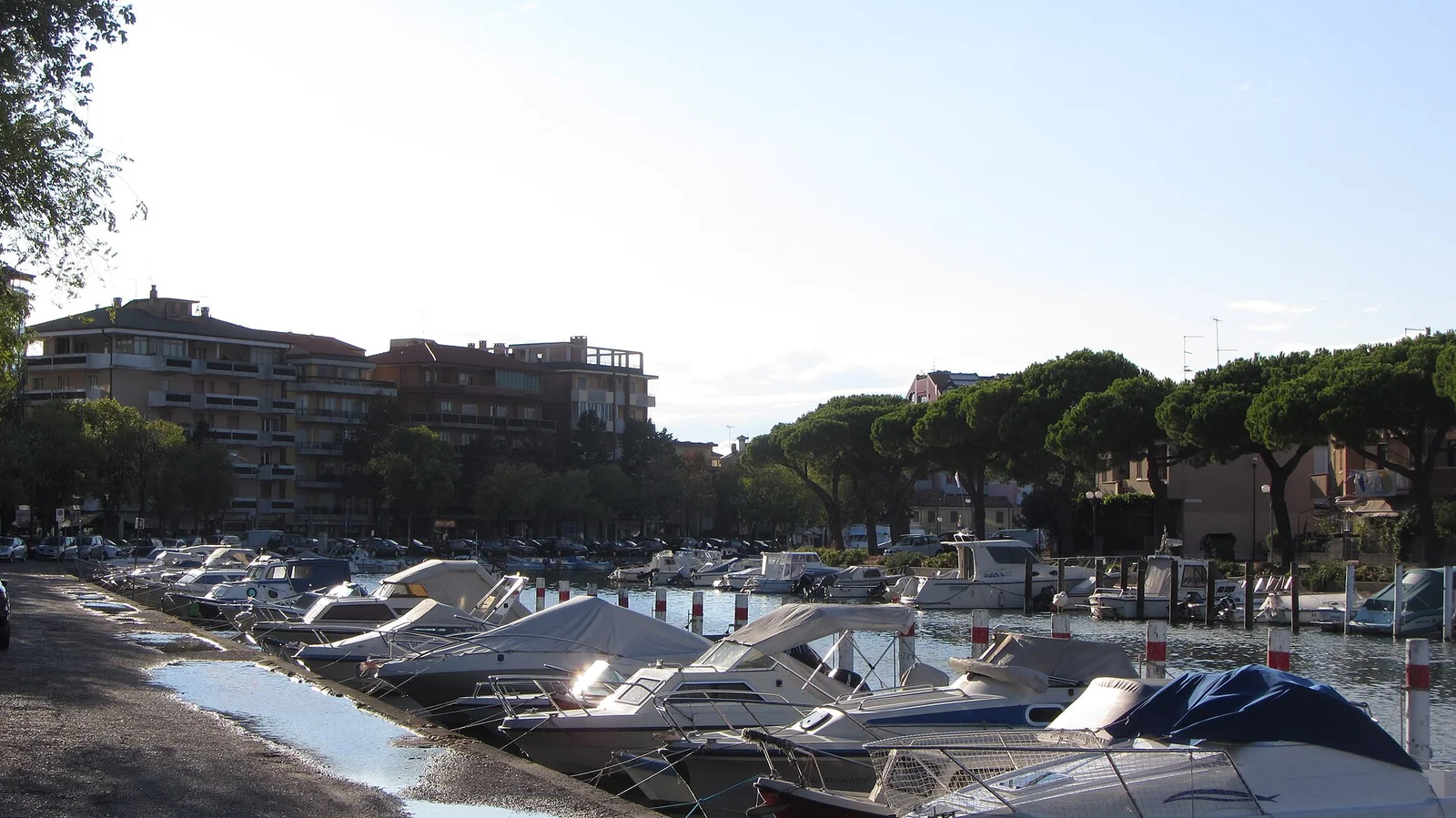
The port allows you to return from church history to the city's relationship with water. It is worth walking around the available quays and seeing how boats, restaurants and walking paths create a common space. Not every wharf is a public parking space; use available crossings and respect the work of staff.
This is a good place for dinner after a trip, but the choice of table does not have to depend solely on the view. If you want to try local cuisine, check the description of the dishes and the serving time. The taste of boreto can also be appreciated in a small restaurant further from the first line of the waterfront.
Walk for 20, 60 and 120 minutes
Twenty minutes is enough for a short tour of the historic core or port. One hour allows you to connect Campo dei Patriarchi with Piazza Biagio Marin and some of the streets. Two hours give you space for accessible interiors and a quieter port, but it's worth counting the meal separately.
After a long stage, there is no obligation to use the largest variant. If you are very tired, choose one square and leave the rest for the morning. Grado will be more interesting watched carefully for an hour than going through a long list without energy.
What to leave for an extra day
Beaches, Barbana, a lagoon cruise, Valle Cavanata and returning to Aquileia are different options the next day. Choose one main one instead of trying to combine them all before you leave. If the group has different interests, the finish line is a natural moment for separate programmes.
A shared evening meal can close the cycling part of the trip, and the next day can remain more relaxed. Grado rewards the extra night well: it allows you to rest, see the city in a different light and only then start returning to the car.
Sources and currency
- Grado Turismo - city and historic centre ↗Checked: 2026-11-24
- PromoTurismoFVG - Sant'Eufemia ↗Checked: 2026-11-24
- PromoTurismoFVG - Basilica della Corte ↗Checked: 2026-11-24
Organizational tips, selection of stops and scenarios are editorial suggestions. Times and budgets are not an offer or reservation. Check the opening of attractions, announcements and transport conditions for a specific date. Additional trips are not automatically part of the GPX.