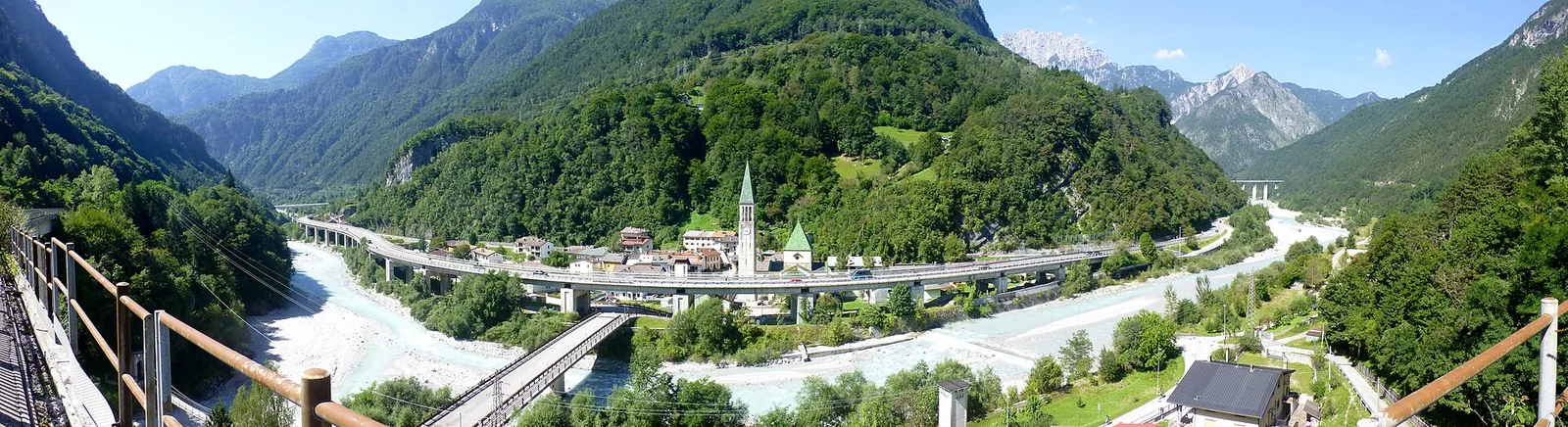
A small town with several time scales
In Dogna, three very different stories can be juxtaposed: an ancient environment recorded in fossils, traces of conflicts and the everyday life of a mountain community. You don't need to know the entire history of the region to make this arrangement clear. For a group with different interests, this is an advantage: one visit can offer something more than another religious interior.
The basic Alpe Adria ride and the village tour are not the same. Check the access from the path to your chosen destination, and book a longer stop at the museum only after confirming the opening. The five-day option does not end in Venzone, so the extra hour still affects the commute to Buja.
Museo del Territorio: three reasons to enter
The official description of Dogna indicates the museum's paleontological, historical and ethnographic heritage. A special element are the traces of predatory reptiles from the Triassic; the ethnographic part also includes works by local painter Fred Pittin. This is a concrete alternative to viewing monuments only from the outside.
Choose one main theme in advance. When looking at fossils, ask about the former environment and how to recognise traces. In the ethnographic part, look for information about work and life in the valley. When looking at art, pay attention to how the local artist depicted the surroundings. Thanks to this, the exhibition will not become a series of objects, of which it is difficult to remember even one of them after leaving.
How to read a trace, not just look at a stone
A trace in a rock gives a different type of information than a complete skeleton. It is worth looking at its shape, repeatability and how researchers explain the animal's movement. However, do not draw your own certain conclusions about the species from a brief look: use the captions and exhibition materials.
It's a good topic of conversation as we continue cycling. Today's mountain landscape may conceal a record of conditions that were very different. The museum gives you a tool to look at the rocks and the valley as the result of long changes, not just the spectacular scenery of a bicycle route.
War in the history of the town
Dogna was heavily damaged during World War I and then rebuilt. The official portal of the region also indicates preserved war traces in the valley, including Linea Plans. This story is different from the prevailing story in Venzone about the 1976 earthquake.
It is worth keeping this distinction: a similar impression of a "rebuilt town" may result from completely different events. In Dogna, look at the relationship of the settlement with the valley and transport roads. The strategic location was a source of economic opportunities, but also exposed residents to the effects of conflicts.
Footbridge and connection with the station
The regional description mentions the Sonus Silentium Dognae footbridge, which formerly connected the town with the station. This is an interesting little piece of communication history: the great railway also needed daily, local routes. Without them, the station would remain separated from the life of the town.
If you want to see it, check access and ride your bike where conditions or markings require it. We do not make the footbridge a necessary part of GPX. It is worth treating it as a point of observation of the relationship between the river, the settlement and transport, rather than just another attraction to pass.
What can fit in a short stop
Dogna also makes sense without the museum. With a short break, it is enough to see the town and the entrance of the side valley. Don't go up Val Dogna just because an attractive-sounding pass appears on the map: it's a separate effort and a different profile.
Table scrolls horizontally →
| 20 minutes | 60 minutes | 120 minutes |
|---|---|---|
| A short walk and a look at the relationship between the town and the valley. | One goal: a museum, if available, or a walk with a footbridge. | Museum and a quieter tour of the town; without a long trip to the pass. |
Sella Somdogna and mountain destinations off the plan
Sella Somdogna, Sella Bieliga and mountain trails appear in the descriptions of the area. Their presence in the Dogna materials does not mean that they can be added to the journey south without cost. Separate information about the commune from information about the Alpe Adria trail.
If you are particularly interested in the valley, write it down as an idea for a separate stay. In this expedition, Dogna can play a much simpler role: a place where for an hour you change your perspective from speed and landscape to geology and the fate of the inhabitants. That's a strong enough reason to stop.
Sources and currency
- PromoTurismoFVG - Dogna ↗Checked: 2026-11-24
- Comunità di Montagna - Museo del Territorio di Dogna ↗Checked: 2026-11-24
Organizational tips, selection of stops and scenarios are editorial suggestions. Times and budgets are not an offer or reservation. Check the opening of attractions, announcements and transport conditions for a specific date. Additional trips are not automatically part of the GPX.